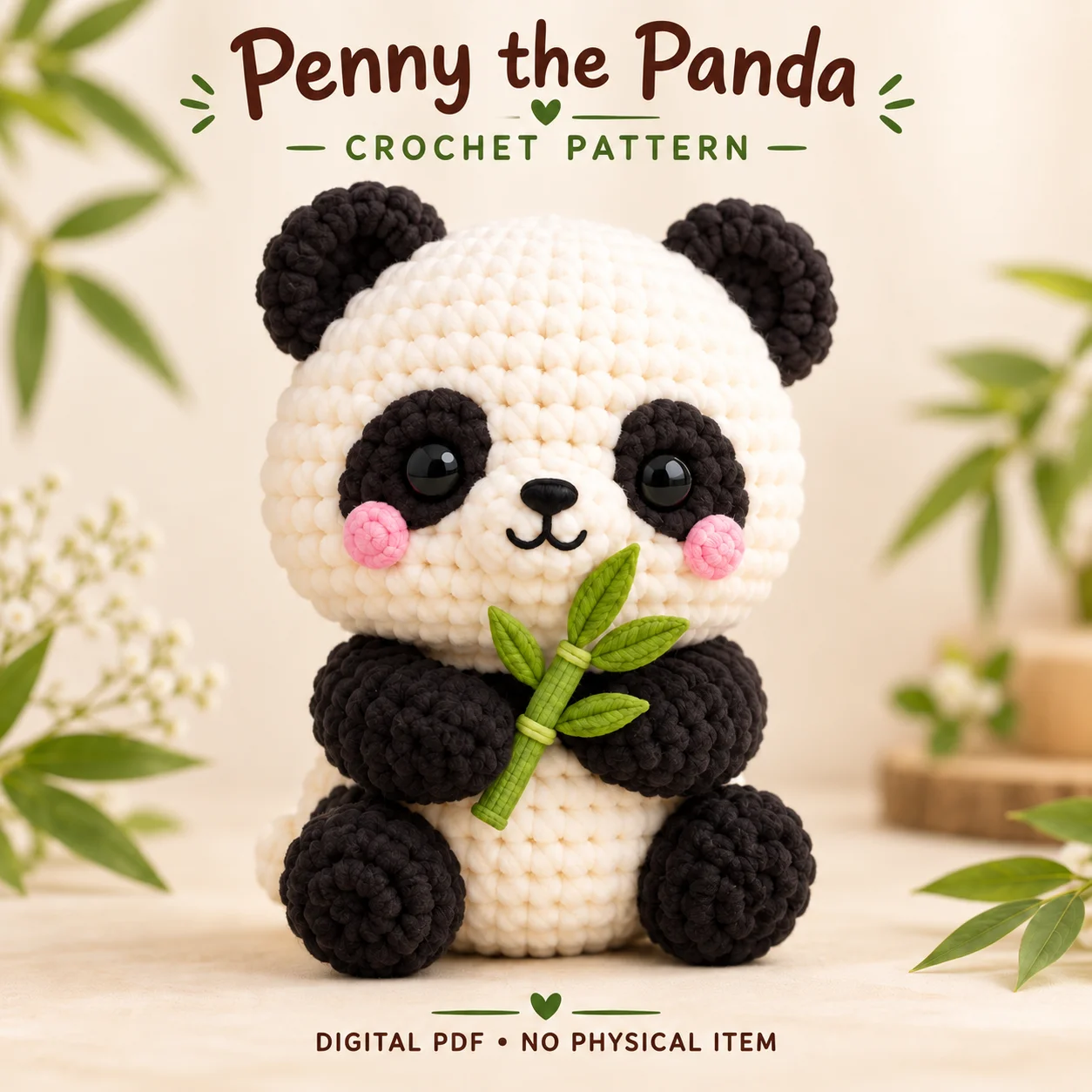
Penny is a seated ivory-and-black panda holding a soft green bamboo sprig between rounded hands. This crochet panda pattern creates the main color blocks from separate pieces, keeping dark yarn floats out of the ivory head and body. The supplied PDF is aimed at advanced beginners and intermediate makers using US terminology. Vertical black eye patches, pink cheeks and a softly padded muzzle create the expression. The bamboo has a folded stem, wrapped nodes and four separate leaves. Plan the accessory before attaching the arms so both hands can hold it without crushing the leaves or pulling the shoulders out of place.
Features of this crochet panda pattern
The ivory head is larger than the body, with rounded black ears set high toward the crown sides. Each eye has a flat black patch gently shaped into a vertical oval. The ivory horizontal muzzle carries a black embroidered nose and two short smile curves. Arms and feet are black, while the torso and small back tail remain ivory. The green bamboo lies slightly diagonal across the front. Four unfilled leaves extend from the upper and upper-middle stem areas.
Flat, lightly padded and firmly stuffed pieces serve different purposes. Preserve those distinctions for a recognizable silhouette.
Skills and stitch methods
The main plush pieces and small circular appliques use continuous spiral rounds. The bamboo stem uses turned rows before being folded lengthwise and seamed. Leaves combine slip stitches, single crochet, half double crochet and double crochet around a foundation chain. Yarn-under single crochet is recommended for the compact three-dimensional texture; a consistent yarn-over method is also allowed. Track round starts separately from removable physical front and back guides used for eye, limb and neck placement.
Before beginning this crochet panda pattern, identify which sections are flat and which are stuffed. Read each section heading before continuing, and check the stitch totals at the end of shaping rounds. Counting early is easier than finding a missing increase beneath several completed rounds.
Yarn, tools and filling
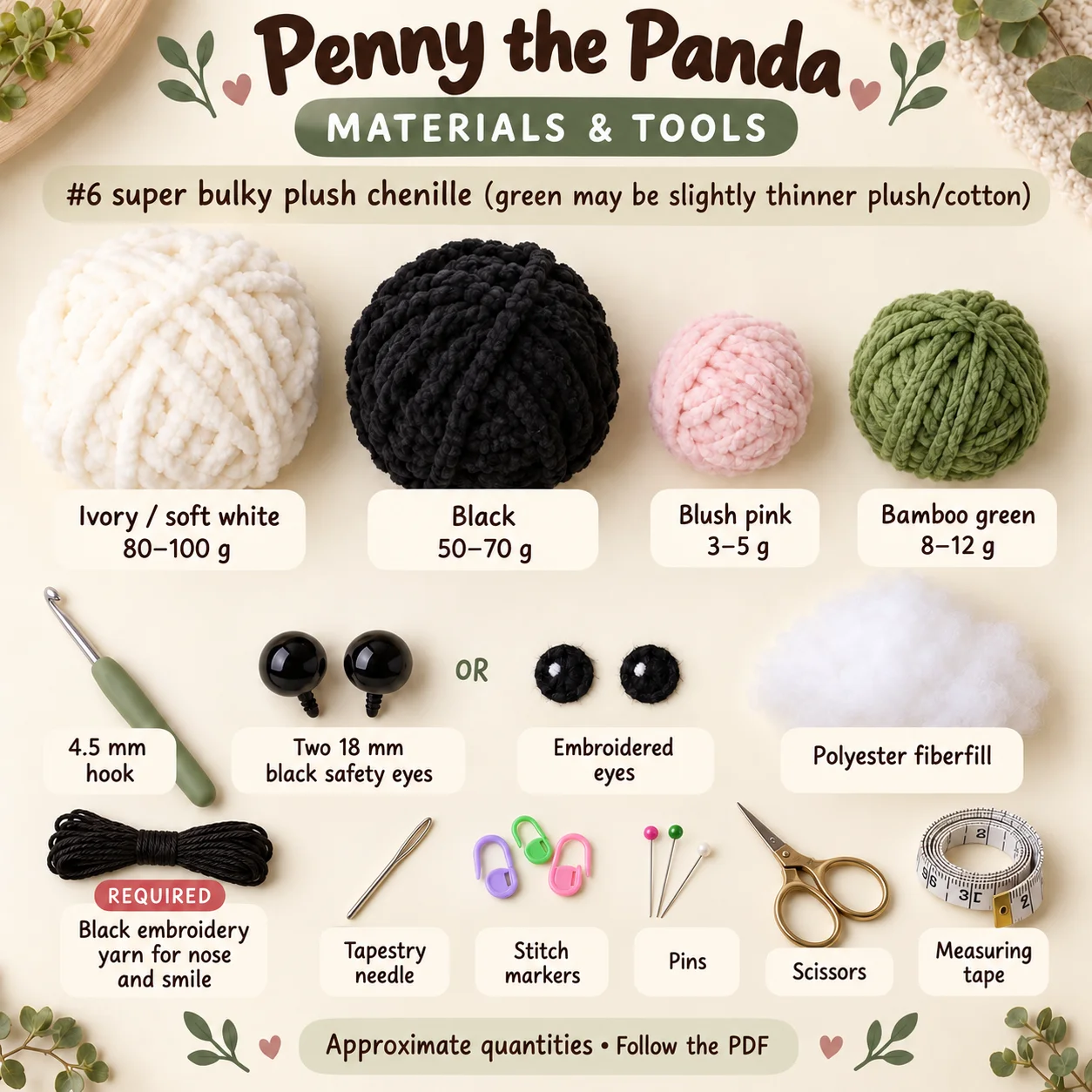
Use #6 super bulky plush chenille (green may be slightly thinner plush/cotton). The approximate supplies listed in the PDF are:
Ivory / soft white 80–100 g; black 50–70 g; blush pink 3–5 g; bamboo green 8–12 g. 4.5 mm hook; two 18 mm black safety eyes OR embroidered eyes; polyester fiberfill (PDF gives no weight); REQUIRED black embroidery yarn for nose and smile; tapestry needle, stitch markers, pins, scissors, measuring tape.
Quantities are approximate and change with substitute yarns. Keep embroidery supplies separate from main yarn colors. Use pins for placement and locking markers for face and back references.
Gauge and finished proportions
The reference gauge is about eleven single crochet stitches and ten rows over 10 cm in a flat swatch with a 4.5 mm hook and category 6 plush yarn. The approximate dimensions is 20–22 cm, and the width across the feet is 15–17 cm. These are finished-size guidelines rather than measured guarantees. The green accessory yarn may be slightly thinner plush or cotton, but the main ivory and black pieces should use compatible thicknesses to preserve proportions.
For this crochet panda pattern, compare the fabric and proportions together. A swatch with visible gaps needs attention before stuffing, while a much denser substitute can change the size of every paired component. Recheck the main shapes before attaching the smaller details.
Construction and assembly order
Pause the head before decreasing to pin the black eye patches and fit the eyes. A hardware post passes through the patch center and the ivory head, with its washer secured inside. Mark positions instead if using embroidery, then complete the facial details after filling. The head and body both finish with eighteen-stitch neck openings. Keep the last head rounds softer so the seam and neck filling can be adjusted before the final stitches close.
Finish the padded muzzle, black embroidered nose and smile, flat cheeks and lightly filled ears. Join the head and body with their physical guides aligned, then add the feet and small ivory tail. Fold and seam the unfilled green stem, wrap its two node areas and attach four leaves. Pin the sprig across the front before positioning the arms. Bring both black hands inward around the stem and add small hidden tacks to prevent the accessory rotating.
The crochet panda pattern is easier to assemble when all paired pieces are laid out together. Keep the PDF open at its placement notes, pin before sewing and pause to compare front, side and back views. Small corrections at this stage prevent larger changes after the seams are secured.
Practical tips for neat details
- Shape eye patches into soft vertical ovals before securing them.
- Keep black color blocks separate from the ivory spiral pieces.
- Make four leaves and leave every leaf unfilled.
- Pin the bamboo before sewing the arm bases permanently.
- Use small hidden arm-to-stem tacks without flattening the hands.
When working from the crochet panda pattern, leave the recommended sewing tails and keep the attachment order visible beside your work. Avoid tightening a seam so strongly that it dents the stuffed shape. If a piece rotates while sewing, stop, re-pin it and check the reference markers before continuing.
Troubleshooting
Why does this project have rotating bamboo?
Check that the arms angle inward and the sprig lies at the intended gentle diagonal. The PDF uses small hidden stitches through each inner arm edge and the stem to keep it in place. Add or reposition those tacks after comparing the leaf tips. Tightening the whole arm seam to trap the bamboo can distort the rounded hands and is not necessary.
Why do the black eye patches curl?
The patches are unfilled surface pieces. Sew their edges with small shallow stitches, pulling only enough to bring the layers together. Excess tension can cup the patch or dent the ivory head. Loosen the affected edge, re-pin its vertical oval and compare both sides before continuing. Check eye positions before securing hardware washers.
Why does the panda rock backward?
Place the body and both feet on a level surface while they are still pinned. A rounded underside or feet placed too far back can reduce the intended seated contact. Redistribute some rear lower filling and move the feet slightly forward if needed, then compare their heights. Keep the lower body broad rather than packing its center into a ball.
Finishing and care
Inspect the four leaf attachments, wrapped nodes and hidden bamboo tacks alongside the neck and limb seams. The accessory should remain soft without wire or rigid inserts. Remove all pins and guide yarn, then secure and bury the sewing tails. Choose cleaning methods from the actual yarn and filling labels, including any different green fiber. The digital pattern does not claim a physical prototype or test crochet, so avoid promising exact size or a tested care method.
Before calling your crochet panda pattern project complete, inspect the hidden joins as well as the visible face. Secure loose ends using the PDF’s finishing method and confirm that all small details are firmly attached. The design dimensions are estimates; record your own finished measurements if you plan another version with the same yarn.
Download the complete PDF pattern
This PDF contains the complete crochet pattern for Penny the Panda. Digital download only; no physical item will be shipped.
Related projects: Bruno the Bear, Mochi the Koala.
Browse the crochet pattern collection for more project overviews.
Leave a Reply