
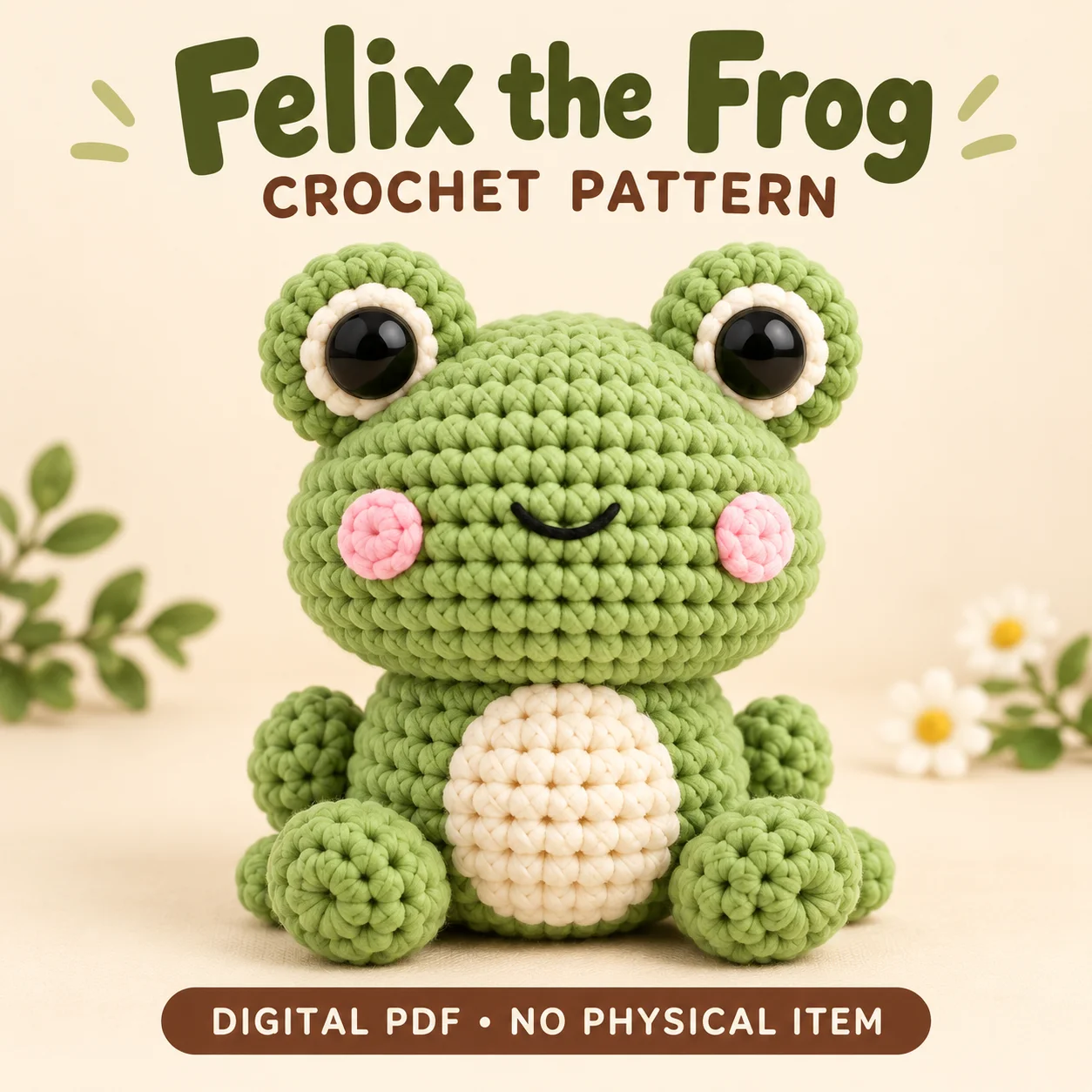
Felix is a wide-headed green frog with raised eyes, pink cheeks and a simple stitched smile. This crochet frog pattern uses separate eye bulges and cream discs to make the face, rather than placing eyes directly into the main head. The supplied PDF suits confident beginners and intermediate makers who can assemble several rounded pieces and a flat belly patch. Small arms contrast with broad hind legs and forward feet, giving the character a squat seated silhouette. The eye assemblies need to be completed before they are attached, so review that sequence before starting. Physical front and back guide threads also help keep the facial embroidery and paired leg units balanced.
Features of this crochet frog pattern
The head should be wide and low, with two round green eye bulges high on either side. Each bulge has a flat cream disc around a large black eye. A shallow black smile is embroidered directly onto the green head, without a separate nose or muzzle. The body has a vertical cream belly patch, small green arms and broad upper hind legs. Separate round feet are attached to those legs. A small rounded green tail sits low at the back.
Flat, lightly padded and firmly stuffed pieces serve different purposes. Preserve those distinctions for a recognizable silhouette.
Skills and stitch methods
Main three-dimensional pieces use continuous spiral rounds. Cream eye discs and pink cheeks use joined rounds, while the belly patch is worked in turned rows. Joining slip stitches and chains do not add to the counts. The intended compact texture uses yarn-under to draw up a loop and yarn-over to finish the single crochet. The PDF allows a consistent standard yarn-over alternative with possible texture and size changes. Read the separate standard and invisible decrease definitions carefully.
Before beginning this crochet frog pattern, identify which sections are flat and which are stuffed. Read each section heading before continuing, and check the stitch totals at the end of shaping rounds. Counting early is easier than finding a missing increase beneath several layers of plush stitches.
Yarn, tools and filling
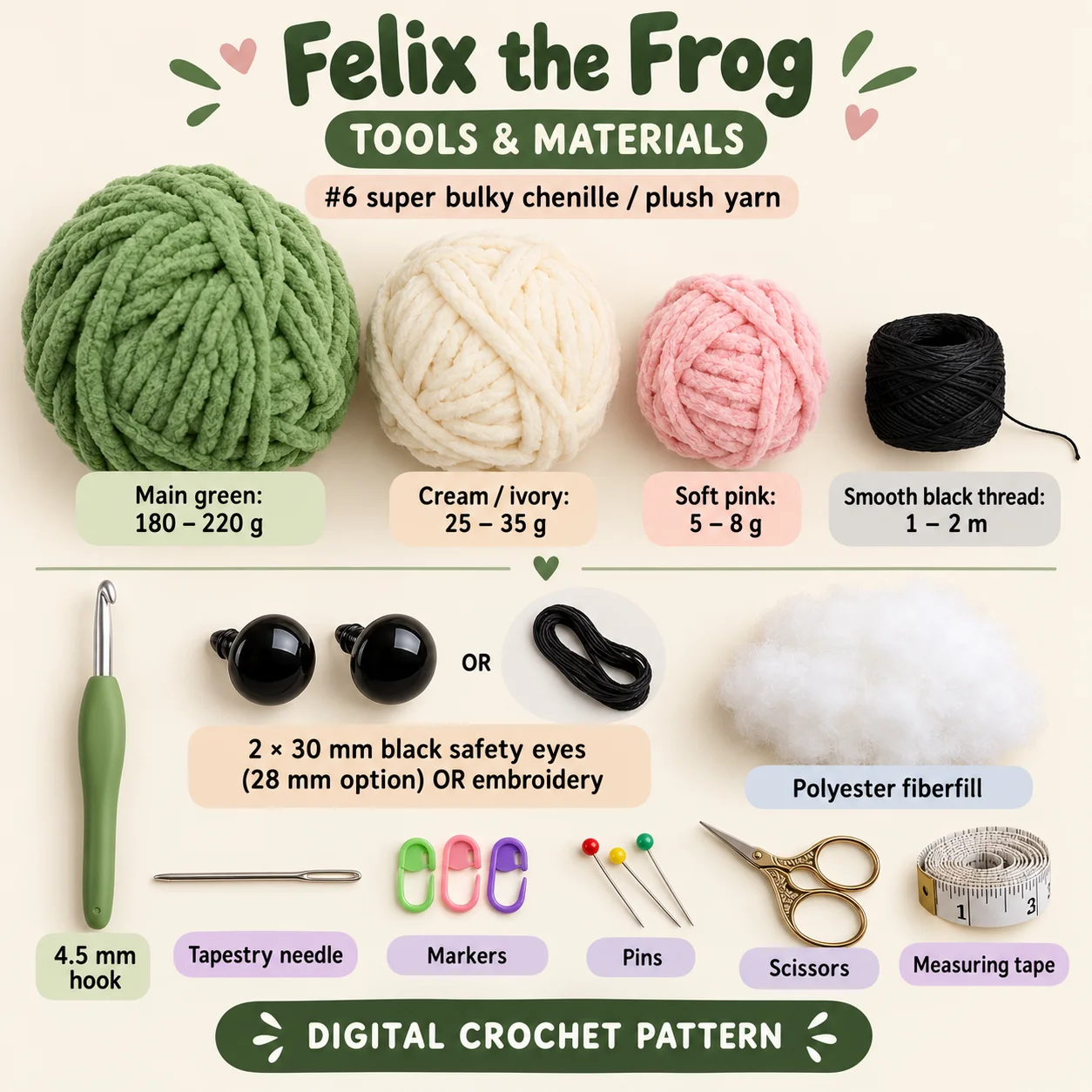
Use #6 super bulky chenille / plush yarn. The approximate supplies listed in the PDF are:
Main green: 180–220 g; Cream / ivory: 25–35 g; Soft pink: 5–8 g; Smooth black thread: 1–2 m. 4.5 mm hook; 2 × 30 mm black safety eyes (28 mm option) OR embroidery; Polyester fiberfill (amount not specified); Tapestry needle, markers, pins, scissors, measuring tape.
Quantities are approximate and change with substitute yarns. Keep embroidery supplies separate from main yarn colors. Use pins for placement and locking markers for face and back references.
Gauge and finished proportions
The reference gauge is approximately thirteen single crochet stitches and twelve rounds over 10 cm using a 4.5 mm hook and category 6 chenille. The seated height target is 25–28 cm, with a width across the feet of 24–27 cm. The head is intended to be broader than the body. These are calculated design ranges, and real size varies with yarn, tension and filling. The supply list includes polyester fiberfill but does not give a gram quantity.
For this crochet frog pattern, compare the fabric and proportions together. A swatch with visible gaps needs attention before stuffing, while a much denser substitute can change the size of every paired component. Recheck the main shapes before attaching the smaller details.
Construction and assembly order
Assemble each eye while its green bulge remains accessible. A hardware post passes through the magic-ring center of the cream disc and then the green bulge, with the washer secured inside the bulge. Tack the cream edge flat before filling. For embroidered eyes, work the dense black oval on the cream disc before stuffing or attaching the assembly. Keep the circular base open so it can be sewn evenly onto the shaped head.
Shape the main head into a low oval, mark physical front and back, and attach the mirrored eye bulges with pupils facing forward. Add the cheeks and single smile, securing embroidery through the open neck. Sew the cream belly patch onto the body and join the matched 24-stitch head and body openings. Build each hind-leg unit by attaching a closed foot to its upper leg, then position both units low on the body. Finish with the centered back tail and small arms.
The crochet frog pattern is easier to assemble when all paired pieces are laid out together. Keep the PDF open at its placement notes, pin before sewing and pause to compare front, side and back views. Small corrections at this stage prevent larger changes after the seams are secured.
Practical tips for neat details
- Complete the eye-disc and eye-bulge assembly before adding its filling.
- Keep the eye bulge bases circular rather than pulling them into cones.
- Use separate physical guides for placement instead of the drifting round start.
- Keep the belly patch vertical and visible between the forward feet.
- Attach each foot slightly ahead of its upper leg and mirror the outward angle.
When working from the crochet frog pattern, leave the recommended sewing tails and keep the attachment order visible beside your work. Avoid tightening a seam so strongly that it dents the stuffed shape. If a piece rotates while sewing, stop, re-pin it and check the reference markers before continuing.
Troubleshooting
Why does this project have uneven raised eyes?
Unpin both eye bulges and compare their centers against the same head-round reference and physical front guide. The cream fronts should face forward, with similar slight outward angles. Check from the top as well as the front before sewing. Adjust the attachment bases rather than rotating the already secured hardware inside each bulge.
Why does an eye bulge look pointed?
Too much filling or an uneven base seam can turn the round dome into a cone. Remove some filling while access remains and roll the shape gently between your hands. Keep the open base circular during sewing, with even stitch spacing. The cream disc should stay flat against the green surface.
Why does one foot turn inward?
Check the foot-to-upper-leg contact seam before changing the body attachment. The PDF directs the feet forward with a small outward turn. Release the affected contact seam, rotate and pin the foot from front and side views, then resew. Compare the completed pair on a level surface before securing the leg units.
Finishing and care
During the final inspection, check the cream disc edges, circular leg seams and small tail attachment. Confirm that the smile has not puckered the green face and that both feet rest at the same level. Remove guide threads and bury tails through the stuffed interior. Follow the labels for your chosen yarn and filling for cleaning; no tested care method is established by the digital design.
Before calling your crochet frog pattern project complete, inspect the hidden joins as well as the visible face. Secure loose ends using the PDF’s finishing method and confirm that all small details are firmly attached. The design dimensions are estimates; record your own finished measurements if you plan another version with the same yarn.
Download the complete PDF pattern
This PDF contains the complete crochet pattern for Felix the Frog. Digital download only; no physical item will be shipped.
Related projects: Pudding the Little Chick.
Browse the crochet pattern collection for more project overviews.
Explore other sea and land animals in our free crochet animal pattern library. For Felix’s joined rounds and spiral sections, the Craft Yarn Council crochet abbreviation list is a handy general reference, but keep the project-specific round instructions beside your work.
Leave a Reply