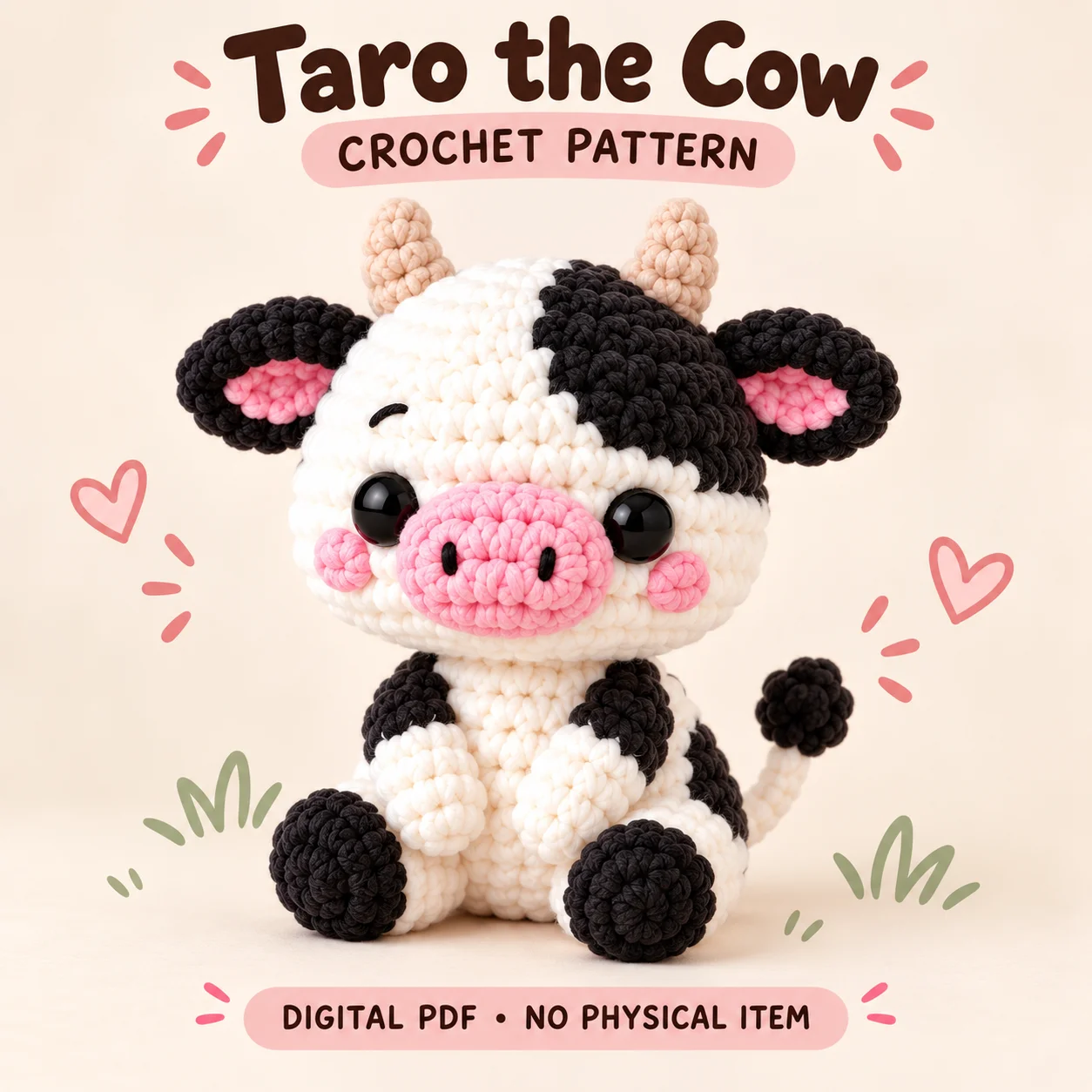
Taro is a seated black-and-white cow with a large rounded head, pink muzzle and softly tapered beige horns. This crochet cow pattern builds the character from separate plush-yarn pieces, with a flat crown patch and two deliberately different body spots. The supplied PDF is aimed at confident beginners who can track spiral rounds, make simple color changes and sew components in place. One eyebrow and an upward bobble-tipped tail give the design its asymmetrical personality. The face needs planning before the head is closed, especially because the crown patch ends above the eye rather than covering its center. Read the placement notes first so these small details remain clear during assembly.
Features of this crochet cow pattern
The main head and pear-shaped torso are white. Black appears in the ears, short shoulder sections, rounded hooves, tail tip and separate patches. Pink inner ears, cheek circles and a horizontal oval muzzle soften the contrast. The large body spot sits on Taro’s right side, while the medium spot is placed toward the left back. The single curved eyebrow belongs above the right eye. Directions use the cow’s own left and right, so they appear reversed when you face the toy.
Flat, lightly padded and firmly stuffed pieces serve different purposes. Preserve those distinctions for a recognizable silhouette.
Skills and stitch methods
Most components use continuous spiral rounds. The muzzle and ear pieces begin around both sides of a foundation chain to make ovals; the black crown patch uses turned rows. The PDF intends standard yarn-over single crochet, not yarn-under as its default texture. You will also use magic rings, increases, invisible decreases, color changes and small whip or ladder seams. Mark the beginning of each round and retain the face reference while pinning.
Before beginning this crochet cow pattern, identify which sections are flat and which are stuffed. Read each section heading before continuing, and check the stitch totals at the end of shaping rounds. Counting early is easier than finding a missing increase beneath several layers of plush stitches.
Yarn, tools and filling
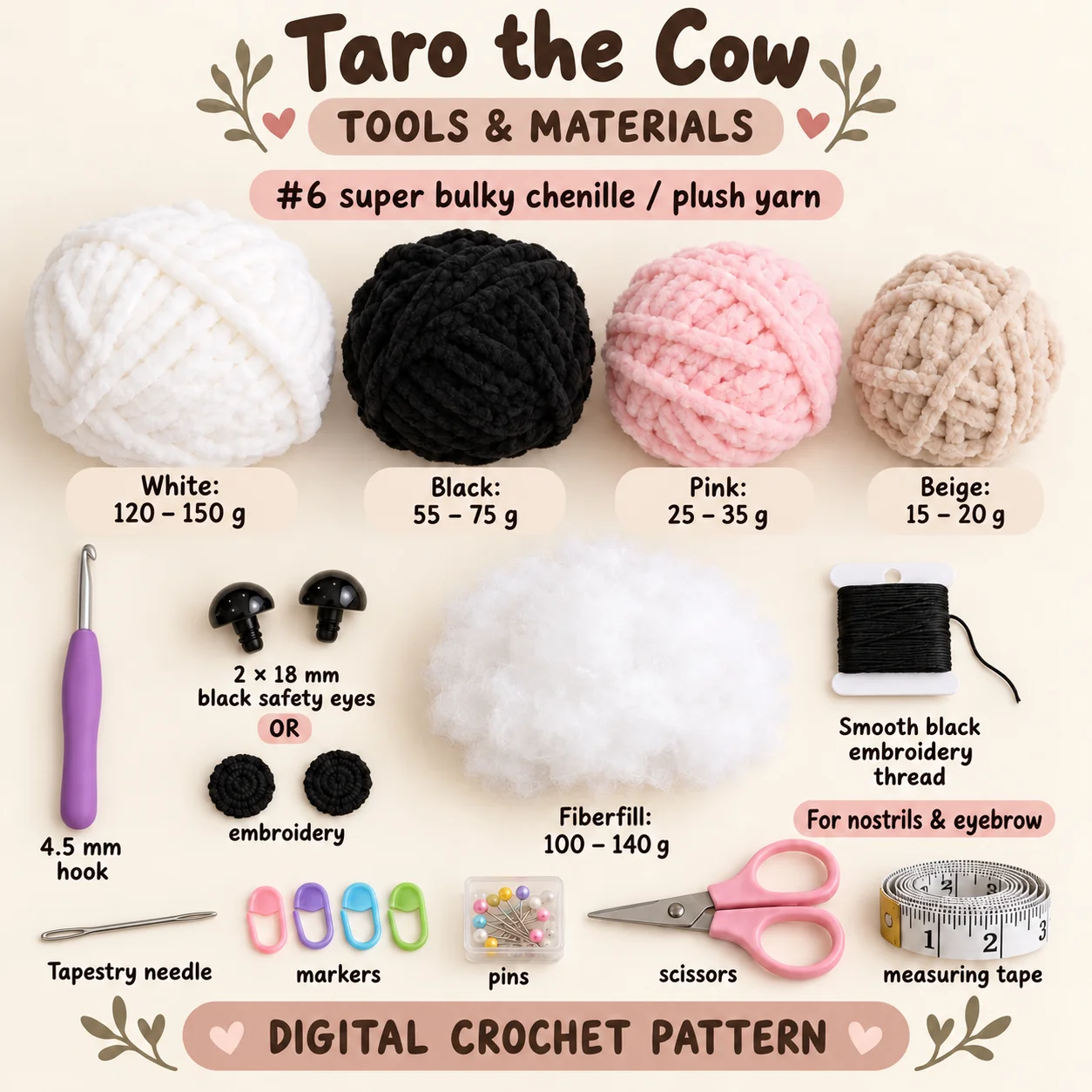
Use #6 super bulky chenille / plush yarn. The approximate supplies listed in the PDF are:
White: 120–150 g; Black: 55–75 g; Pink: 25–35 g; Beige: 15–20 g. 4.5 mm hook; 2 × 18 mm black safety eyes OR embroidery; Fiberfill: 100–140 g; Smooth black embroidery thread; Tapestry needle, markers, pins, scissors, measuring tape.
Quantities are approximate and change with substitute yarns. Keep embroidery supplies separate from main yarn colors. Use pins for placement and locking markers for face and back references.
Gauge and finished proportions
The stated gauge is approximately five single crochet stitches and eight rounds over a 5 cm square. Preserve this measurement as written rather than assuming a more usual gauge. The recommended hook is 4.5 mm, with 4.0 mm suggested for gaps and 5.0 mm if the fabric becomes excessively stiff. The seated height target including horns is 23–26 cm. These are digital design estimates; material substitutions and filling can affect both dimensions and yarn use.
For this crochet cow pattern, compare the fabric and proportions together. A swatch with visible gaps needs attention before stuffing, while a much denser substitute can change the size of every paired component. Recheck the main shapes before attaching the smaller details.
Construction and assembly order
The head pauses before its decrease section so the flat black crown patch can be sewn down and the eyes installed. The patch sweeps toward Taro’s left eye but stops just above it. Both eye posts pass through white head fabric only. The head is then filled and fully closed. The body is also closed separately, so the neck attachment is a surface seam between finished shapes rather than a join between two matching open neck edges.
Complete the muzzle and cheeks, embroider two vertical nostrils and the single eyebrow, then attach the prepared ears and lightly filled horns. Add the asymmetrical body spots before joining the head and torso with their front and back references aligned. Attach the low legs and inward-facing arms. The arms have white hands and black shoulders; the legs have black hooves and white upper sections. Join the black bobble to the white tail stem before attaching its base at the left-back quadrant.
The crochet cow pattern is easier to assemble when all paired pieces are laid out together. Keep the PDF open at its placement notes, pin before sewing and pause to compare front, side and back views. Small corrections at this stage prevent larger changes after the seams are secured.
Practical tips for neat details
- Leave white fabric visible around both eyes when pinning the crown patch.
- Keep the two body spots different sizes rather than trying to mirror them.
- Use very light shoulder filling so the white hands can angle inward.
- Leave the white tail stem unfilled and lightly fill only its black tip.
- Check that the horn tips rise to similar heights before finishing either seam.
When working from the crochet cow pattern, leave the recommended sewing tails and keep the attachment order visible beside your work. Avoid tightening a seam so strongly that it dents the stuffed shape. If a piece rotates while sewing, stop, re-pin it and check the reference markers before continuing.
Troubleshooting
Why does this project have an off-center muzzle?
Use the saved center-front reference and compare the muzzle against both eyes. The oval should lie horizontally beneath them. Release the first few attachment stitches if needed, re-pin its center and check the cheek spacing before continuing. Add filling only near the end of the seam so you can keep the projection soft and even.
Why does the tail point sideways?
The tail base belongs at Taro’s left-back body quadrant, with the white stem initially angled upward. Re-pin that base before completing its seam and leave the stem flexible. Sewing farther along the stem can trap the curve. Check that the round black bobble remains free rather than pressed against the torso.
Why does one horn sit higher?
Compare both bases against the same crown-round range, then check the tips from front and back. A lightly filled horn can be repositioned at its base without remaking the whole piece. Unpick only the affected attachment, adjust its height and angle, and tack opposite sides before finishing the seam.
Finishing and care
During the final check, compare the hooves, horns and ear angles while preserving the intentional spot and eyebrow asymmetry. Press the seated base gently on a level surface and inspect the neck seam for loose areas. Follow the actual yarn and filling labels for cleaning; the PDF’s digital size targets do not establish a tested washing method. Avoid lifting the finished piece by its horns or thin tail.
Before calling your crochet cow pattern project complete, inspect the hidden joins as well as the visible face. Secure loose ends using the PDF’s finishing method and confirm that all small details are firmly attached. The design dimensions are estimates; record your own finished measurements if you plan another version with the same yarn.
Download the complete PDF pattern
This PDF contains the complete crochet pattern for Taro the Cow. Digital download only; no physical item will be shipped.
Related projects: Bruno the Bear.
Browse the crochet pattern collection for more project overviews.
Leave a Reply